
Turn off the
lights when you leave a room

Turning off the lights saves both energy and money. For
example, a standard bulb uses 60 watts of energy an hour and can chew through a
whole kilowatt of energy over approximately 16 hours. A kilowatt hour of energy
costs approximately $0.12. Leaving that light on unnecessarily for 16 hours a
day all year adds up to 365 kilowatts of energy and $43.80 down the drain! Leave
the lights on in a room with multiple bulbs and you will cost yourself even
more. CFL and LED bulbs use less energy but they still should be turned off
when you leave the room.
If your household occupants are having difficulty remembering
to regularly turn the lights off you can install motion or occupant sensors.
These will automatically turn off lighting when no one is present and come back
on when they return. There are also some creative systems designed to help you
monitor your lights, like the Tio
for kids!

Unplug your
appliances/ electronics when you are not using them
Electricity continuously flows through the plugs of your electronic
gadgets so they are ready to jump into action at any time; even if your gadgets
aren't on they are still consuming energy to be ready when you are. Things that are not on but are still plugged in
suck up to $4 billion a year in energy; just your laptop plugged into the wall
and turned on can cost you $9.00 a year!
To remedy this unplug your electronics manually or plug groups of
electrical items into Smart Strips. Smart strips stop
drawing power when your gadgets are turned off so your energy emissions and
costs are reduced. How do smart strips work? When a printer plugged into a
basic smart strip goes into standby mode, its power consumption drops.
Consequently the smart strips circuitry detects the change and cuts the power to
that outlet but the rest of the outlets in use stay on.
Conserve water

Turn off the tap and shower when not in use, limit the
number of baths you take, and only run a washing machine or dishwasher with a
full load. You can even install a low-flow shower head and save as much as 60%
of the water used by a conventional fixture! Dripping taps should be replaced
because they can waste 9,000 litres of hot water each year.
Additionally, if you are watering your lawn in the summer
purely for aesthetics, consider decreasing the amount of water you use on it
and let it become brown. Grasses go dormant when they go without water, but do
not die. A prolonged drought will eventually kill your grass but if you water
it only a couple times a month (or it rains), your grass should still be fine.
Recycle
Return your old bottles, cans, and juice containers to
recycling depots. Most cities even have recycling programs for old newspapers,
magazines, paper, and cardboards such as Vancouver’s blue box program. If
you don’t already have a recycling box, check to see if your city offers a
recycling program and get started.
Additionally, make sure to recycle your old electronics such as
computers, cell-phones, televisions, cameras and kitchen appliances such as
microwaves. Recycling all these items reduces the size and affect of landfills,
helps conserve natural resources, decreases pollution, and saves energy. For
example recycling one million laptops saves the energy equivalent
to the electricity used by more than 3,500 US homes in a year.

There are many places you can take your items for proper disposal and
recycling. If you are in the United States, Earth
911
has a quick search option for you to find recycling solutions for many
different items. In North America, the E-Stewards Initiative provides locations for recycling
electronics. For electronics in the US, you can use www.ecyclingcenter.com, www.ecyclingcentral.com, or www.greenergadgets.org to find recycling
locations close to you. In Canada, Environment Canada has links to
where and how you can recycle various items by province.
Call2Recycle is also a great
resource to find locations for recycling your old batteries and cell-phones
anywhere within North America. Additionally, many companies have recycling
programs for their products, with some even offering you a credit or rebate for
returning old products. For example, Apple
offers customers gift cards for returning old iPhones, iPads, Macs or PCs.
Apple will take care of the shipping costs if you mail it back to them or you
can drop it off at any apple store.
Go
paperless
Go a step further than just recycling your paper;
avoid initially using it whenever possible!
- Cancel your paper delivery and use online news websites to keep up to date on important issues
- Sign up for e-billing options wherever possible; most financial institutions, utilities, and electronic service providers now offer this
- Send e-cards instead of paper cards for special occasions
- Print only select pages instead of entire documents
- Keep electronic copies (and backups) of documents on an external hard drive instead of printing them out for your records
- Use cloths or sponges instead of paper towels
- Cancel your yellow pages delivery
- Switch to a metal mesh reusable coffee filter so you do not need disposable paper ones
Line dry your
clothes
A clothes dryer is one of the largest energy hogs in your
home. By relying on air and sun to do the drying work, you eliminate the use of
electricity or gas, reduce greenhouse gas emissions, and conserve non-renewable
resources.
Sunshine acts as a natural sanitizer and whitener,
eliminating the need for bleach. Air-drying is also gentle on fabrics so it
helps them last longer, though dark items should be kept out of the sun or they
will fade. When the weather is not very nice you can dry your clothes on racks
inside instead.

Practice
Socially Responsible Investing (SRI)

People are not the only ones going green; companies
are as well. Spend your dollars on companies that have corporate social
responsibility programs related to the environment and avoid dealing with
companies that cause the environment more harm. Encourage the institutions you
are affiliated with such as universities and banks to invest in companies that
are improving the health of the planet. Many institutions may promote sustainable
initiatives but still invest millions of dollars in fossil fuel stock so do
some research before letting them handle your money.
Turn
down the heat when you are not home
Why keep the heat running if no one is home? It is
another great way to save money on your energy bill. If you are someone who is
in a rush in the mornings and tend to forget, try installing a programmable
thermostat instead. You save 2% on your heating bill for every 1⁰C that the
thermostat is lowered. There are also electronic systems designed to help you
manage the varying levels of heat in your home, like Tado!

2) Buy Green Products
Clean Green
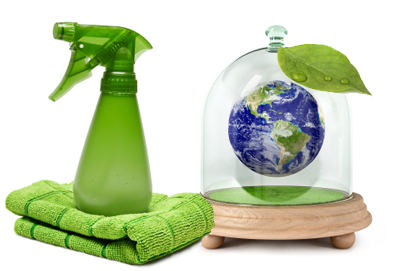 Using green products in your household
cleaning can be better for the health of the planet, yourself, your family, and
your pets. Green products are typically made with natural ingredients and can
reduce the amount of harmful toxins you are exposed to each day. Green products
are also often packaged in recycled or biodegradable materials and offer bulk options
to reduce waste. Research and read the labels of your green products, looking
for words such as biodegradable, 100% recycled, certified
organic, and green certified, to chose the ones that are right for
you. You can also make your own simple formulas
using ingredients like vinegar and lemon juice.
Using green products in your household
cleaning can be better for the health of the planet, yourself, your family, and
your pets. Green products are typically made with natural ingredients and can
reduce the amount of harmful toxins you are exposed to each day. Green products
are also often packaged in recycled or biodegradable materials and offer bulk options
to reduce waste. Research and read the labels of your green products, looking
for words such as biodegradable, 100% recycled, certified
organic, and green certified, to chose the ones that are right for
you. You can also make your own simple formulas
using ingredients like vinegar and lemon juice.
Choose
alternatives to aerosol sprays
 Aerosol sprays are convenient but if the sprays they emit
miss their target those aerosol particles can remain suspended in the air for
hours or even days. Consequently, the particles can become air pollution that
is harmful when inhaled. Additionally, the chemicals used to actually propel
the sprays out of the can include petroleum-derived volatile organic compounds
like isobutene, butane, and pentane, which are unhealthy to breathe and create
air pollution, too. Aerosol sprays are a key reason why ordinary household
products, including cleaners and personal care items, are second only to cars
as the Los Angeles region’s leading source of air pollution.
Aerosol sprays are convenient but if the sprays they emit
miss their target those aerosol particles can remain suspended in the air for
hours or even days. Consequently, the particles can become air pollution that
is harmful when inhaled. Additionally, the chemicals used to actually propel
the sprays out of the can include petroleum-derived volatile organic compounds
like isobutene, butane, and pentane, which are unhealthy to breathe and create
air pollution, too. Aerosol sprays are a key reason why ordinary household
products, including cleaners and personal care items, are second only to cars
as the Los Angeles region’s leading source of air pollution.
Buy energy
efficient appliances and light bulbs
Remember to look for the EnerGuide tag when purchasing
new appliances as it displays a product’s estimated annual energy
consumption and evaluates it against the consumption performance of similar
products. The Energuide label appears on major household appliances, heating,
cooling and ventilation equipment, new houses, and cars.

Also, look for the ENERGY STAR label which indicates the
most energy efficient major appliances, lighting products, electronics,
windows, doors and skylights. Refitting your home with energy saving light bulbs
labelled ENERGY STAR® not only helps the environment, but helps you save money
on your electricity bill as well! Compact fluorescent light (CFL) bulbs use 75%
less energy than incandescent bulbs and can last up to 10 times longer. Light
emitting diode (LED) lights are an emerging technology and are also 75% more
efficient than incandescent bulbs. LEDs can last even longer than CFLs—lasting
15 to 20 times longer than incandescent bulbs.
Wash clothes in
cold water with coldwater detergents
In a typical wash, just heating the water accounts for approximately 75%
of the energy use and GHG emissions generated from the load! To reduce energy
and emissions companies such as Tide have developed cold-water detergents that
compensate for the benefits of heat. This is done through adding different
enzymes and surfactants that work better in cold water to the detergent. Tide’s
Coldwater detergent has been ranked among Consumer Report’s top detergents;
proof coldwater washes with the correct detergents really can get clothes
clean!
Use recycled paper
(when you cannot go paperless)
Paper products often offer at least one recycled version
of a certain percentage, typically anywhere from 30% - 100%. Try buying the
highest percentage you can afford for:
- Tissues
- Toilet paper
- Printing paper
- Paper towel
- Greeting cards
- Envelopes
- And more!
Buy your clothes
from second hand stores or buy clothes made from sustainable fabrics
Textile manufacturing uses large amounts of water while
also emitting large amounts of greenhouse gases and pollutants. Buying your
clothes second hand and donating your old clothes helps to reduce the demand
for new textiles and thus reduces their environmental impacts. If new clothes
are necessary many popular brands like Adidas,
Levi’s and H&M offer clothes made from more eco-friendly
material.
Switch to
rechargeable batteries
Rechargeable batteries are both better for the
environment and save you money in the long run. Most batteries (even
rechargeable ones) can release harmful metals such as mercury, lead and cadmium
when taken to landfills. Rechargeable batteries are easy to recycle though and
because rechargeable ones can be reused numerous times, they result in less
energy and waste product overall.
Although rechargeable batteries cost more initially they
typically can be recharged hundreds of times, consequently saving you from
having to buy hundreds of single use ones which would be overall more
expensive. You can even buy rechargeable batteries that can recharge through
your computer’s USB ports!

Learn more about recycling batteries from our blog post, The
Life, Death, and Resurrection of a Battery.
3) Eat Green
Buy reusable
containers

Use reusable containers and make tonight’s dinner into
tomorrow's lunch! That way you can reduce the amount of packaging used for a
bagged lunch and eliminate the need to get take out. Use reusable coffee mugs
and water bottles to reduce the amount of waste sent to landfills. Plastic
water bottles are a major source of waste in landfills with approximately 40
million plastic water bottles being disposed daily worldwide! Use a water
filter in your home instead and use a stainless steel water bottle (which won’t
leak any chemicals) when on the go.
Compost
 By
composting you can help the environment by naturally recycling a large majority of
your household waste into nutrient-rich soil. Composting reduces
landfill greenhouse gas emissions and toxins, as well as reduces the amount of
space required for landfills. For more information and a guide to easy
composting visit our Composting for a Greener Future
page.
By
composting you can help the environment by naturally recycling a large majority of
your household waste into nutrient-rich soil. Composting reduces
landfill greenhouse gas emissions and toxins, as well as reduces the amount of
space required for landfills. For more information and a guide to easy
composting visit our Composting for a Greener Future
page.
Buy food with
small amounts of packaging
Food packaging generates large amounts of waste. The
average American generates roughly 300 pounds of packaging waste a year. This
makes up about a third of the typical household waste stream, and around 66% consists
of food packaging alone. Additionally, plastic packaging is made from fossil
fuels so buying food with less packaging can help reduce your environmental
impact. Buying in bulk can sometimes facilitate this as it tends to have the
maximum amount of product in a minimum amount of packaging. However, if your
bulk goods are just going into the garbage in the end since you do not have a
real need for them you may not actually be reducing your waste impact.
Eat less meat
Livestock can create about as much greenhouse gas
pollution as cars, planes, and other forms of transport; the production of just
a 1/4lb hamburger can release 6.5 pounds of greenhouse gases. Eating meat also
takes a heavy environmental toll on land and water worldwide with 1,800 gallons
of water being required to produce 1lb of beef. If all Americans did not eat
meat or cheese one day a week, it would have the same effect as taking 7.6
million cars off the road for one year! Learn more about the hidden costs of
beef in this animated short
film from the Center for
Investigative Reporting. Making the change to a full vegetarian may be a
hard change to suddenly make but you can start out by cutting out meat from a
few meals a week or being a weekday vegetarian.
Use reusable
shopping bags

Disposable plastic bags harm the environment as only 1%
of them are recycled and the degradation of them releases toxins. A reusable bag’s
longer utility life equates for the production of many disposable ones
offsetting a reusable bag’s initial production emissions. A key factor in
reusable bags being more sustainable than non-reusable ones is the actual
continued use of the bag; if each bag is used at least once a week, four or
five reusable bags can replace 230 disposable bags a year. Overall reusable
bags make more environmental sense than disposable ones but only if they are
reused many times. Most stores no longer have plastic bags or charge a fee if
you require one.
Buy sustainably
sourced seafood

Today 85% of the earth’s fisheries are being harvested at
or above capacity or have collapsed. The fishing industry also is a major cause
of ocean habitat destruction due to catching methods like trawling. Farm-raised
fish also can have environmental impacts such as pollution, disease, and
contamination of wild fish stocks. When buying seafood look for the label of
the Marine Stewardship Council, which
indicates that a seafood product has successfully met requirements for
sustainability.
Additional resources to determine if your seafood purchase
is sustainable:
- The Environmental Defense Fund’s Pocket Seafood Guide
- Blue Ocean Institute’s FishPhone – Get the FishPhone App for Iphones or you can text 30644 with the message FISH and the name of the fish in question, and they'll send a text back with their assessment and recommended alternatives
- Greenpeace’s Sustainable Seafood Supermarket Scorecard
Purchase
sustainably produced coffee
Coffee is just behind oil as the second most traded
commodity in the world. Coffee beans are generally farmed in areas that are
considered high priority for conservation. You can help maintain these forests
and the wildlife habitat they provide by purchasing coffee that is Rainforest Alliance Certified.
Approximately 1.3% of the world’s coffee is Rainforest Alliance Certified.
Eat local and in
season
Produce that is grown in
your area requires lower inputs to get to the store/farmers’ market/restaurant,
and by buying seasonal produce you’re more likely to get produce that’s local. A good way to know if your food is
sustainably produced is to talk to the farmer! Buy farm-gate produce or
shop at farmers’ markets whenever it’s possible. Ask the farmer how they
grow their crops. The farmers that are passionate about sustainable practices
will enthusiastically share their knowledge. You can read more about
sustainable agriculture on our blog here.

Another
great way to make sure that your food is produced sustainably is to grow your
own! Growing food in your own back yard or community garden ensures that the
food is pesticide and GMO free (so there are no negative impacts on the
surrounding soil, water, or organisms), energy used to produce it is minimized,
and that transport emissions associated with it are very small. Learn more about
the local food movement at Farm-to-Table: Local Sustainability.
Know your certifying bodies so you can eat
organic
Certified organic food is regulated by strict environmental stewardship
and resource conservation standards that seek to enhance natural processes that
sustain plant and animal life in nature and avoid using synthetic methods to
control pests and soil fertility. Organic food standards reduce pesticide use
associated with the contamination and damage of ecosystems and prevent a number
of negative human health problems linked to pesticide use.

Each piece of organic
produce is certified, and each certifying body has different regulations about
what makes the produce organic. By having a general idea which bodies
have regulations to ensure sustainable and ethical practices, you can make
educated decisions while shopping. Canadian Organic
certification indicates
that products meet the Canadian standard for organic production, contain at
least 95% organic ingredients and are not GMOs (genetically modified
organisms). In British Columbia, check out the Certified
Organic Association of BC.
4) Build Green
Renovate or build
eco-friendly
You can use this
tool by the Environmental
Protection Agency (EPA) to estimate your household emissions and provide
possible solutions to lower them. The tool breaks it down in both a dollars
perspective and an emissions perspective for you.
Particularly make sure to seal and insulate your home
well to ensure that your home is not unnecessarily losing heat through your
windows, walls, and doors. Heating costs take up a large chunk of your home’s
energy bill. You can even improve your home’s air tightness by installing caulking
or weather-stripping. Double glazed windows are also a worthy investment.
Find more information on eco-friendly ways to
retrofit existing building structures, eco-friendly home products, and
eco-friendly green roofs here.
Install your own
renewable energy producers for your home

Though some regions generate their grid power from
cleaner energy sources such as hydropower other regions source their grid power
from emission-heavy fossil fuel powered plants. To ensure that the energy that
powers your home is sourced sustainably you can install your own renewable
energy technology. Over the lifetime of your renewable energy producer you
could save money overall and potentially make money selling some energy back to
your region’s energy provider if it generates surplus energy.
Check out our pages on wind, solar, and geothermal energy in the home for
more information.


